5 Ways to Connect With Your Tech Kid
7 min read
Your kid comes downstairs talking about a "sprite" or a "bug" or a "loop that broke everything," and you nod along, half-following, mostly just glad they're excited. That gap, between how thrilled they are and how little of it you actually understand, is one of the most common things parents tell us about at Coder's Clubhouse. The good news: you don't need to learn Python to close it. You need a few small habits, and about ten minutes a week.
1. Ask them to teach you, not just show you
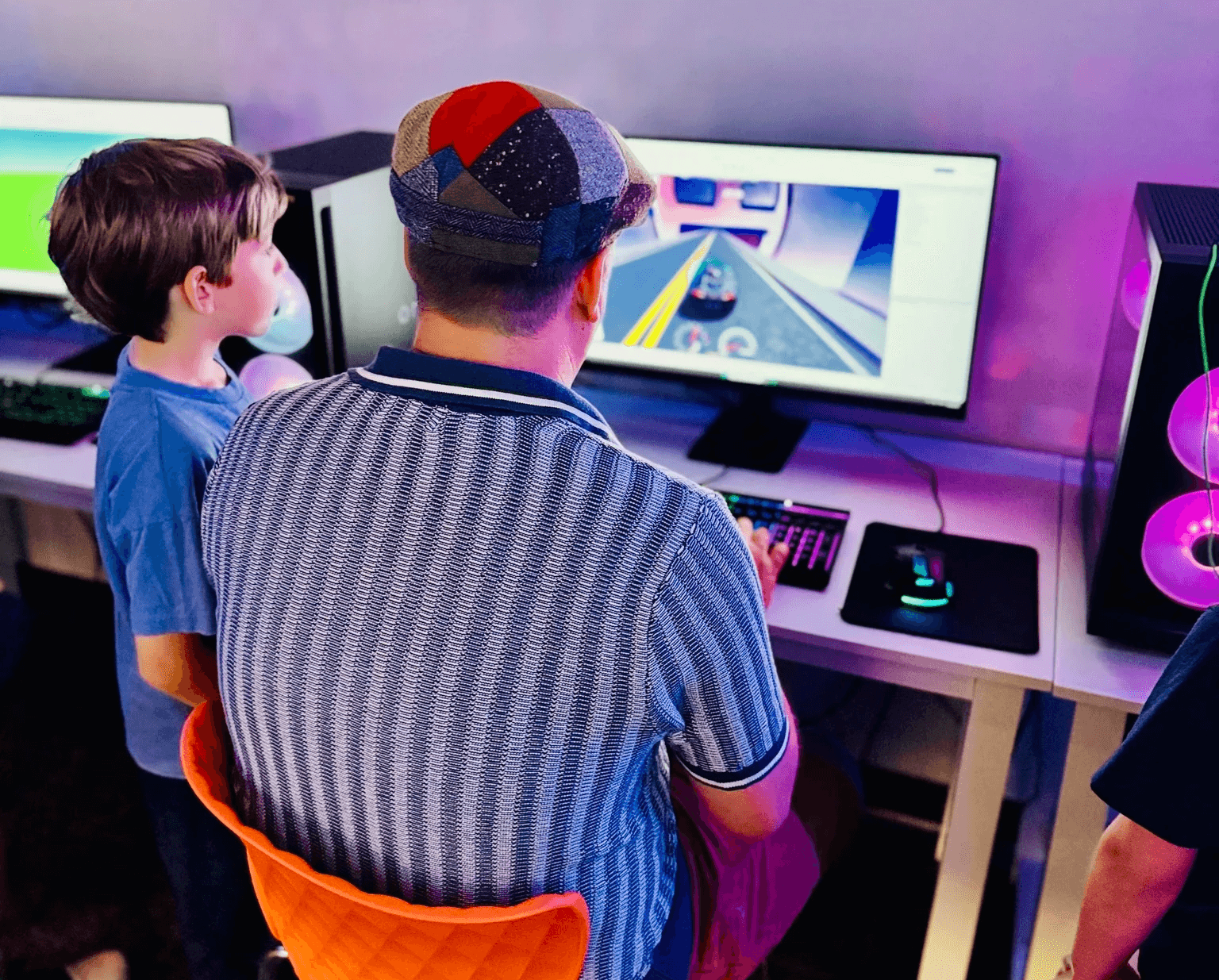
"Show me what you made" gets a 30-second demo and an "it's cool, right?" "Teach me how this part works" gets a real conversation, because now they're not performing, they're explaining. Kids retain more when they teach, and they open up more when they feel like the expert in the room for once - which, in this one specific area, they actually are.
This works even if you genuinely understand nothing. "Walk me through what happens when I press play" is enough of a prompt. You're not grading the explanation. You're just handing them the floor.
2. Watch them build, not just the finished thing
The finished game or animation is the trailer. The actual story is in the 45 minutes before it worked, when nothing worked. Sit next to them for five minutes while they're mid-problem, before they've solved it. You'll see the part they never think to show you afterward: the trial and error, the fifteen failed attempts, the moment something finally clicks.
In our Path Program, we build this into the structure on purpose. Every session ends with a final activity where kids apply what they just learned, plus material from earlier sessions, and an instructor has to personally review and approve it before they move on. There's no skipping the messy middle - it's the actual curriculum, not a side effect of it.
3. Learn ten words, not the syntax
You don't need to write a line of code to follow along. You need to recognize a handful of words well enough to ask a real question instead of a vague one:
• Loop - code that repeats itself, on purpose or by mistake
• Variable - a labeled box that holds a piece of information
• Function - a chunk of code you can reuse instead of rewriting
• Bug - something that isn't working the way it's supposed to
• Debug - the process of figuring out why
When your kid says "the loop keeps repeating and I don't know why," that's not noise anymore - it's a specific, answerable problem. You don't have to solve it. You just have to know enough to ask "what's it supposed to stop on?" and watch them light up because someone finally asked the right question.
4. Ask what was hard, not whether it's good
"Is it good?" invites a one-word answer. "What was the hardest part?" invites a story, and it's usually the most honest, most interesting one they'll tell you all day. It also teaches them, without you saying so, that the struggle is the actual point, not just the output.
I've spent years working in software, first at Microsoft and later at a billion-dollar AI company, and the engineers I respected most were never the ones who never got stuck. They were the ones who could tell you exactly where they got stuck and what finally worked. That's the skill we're actually building in kids - not just "can you code," but "can you describe your own thinking." Asking about the hard part is how you practice that with them at home.
5. Show up for the stuck moment, not just the win
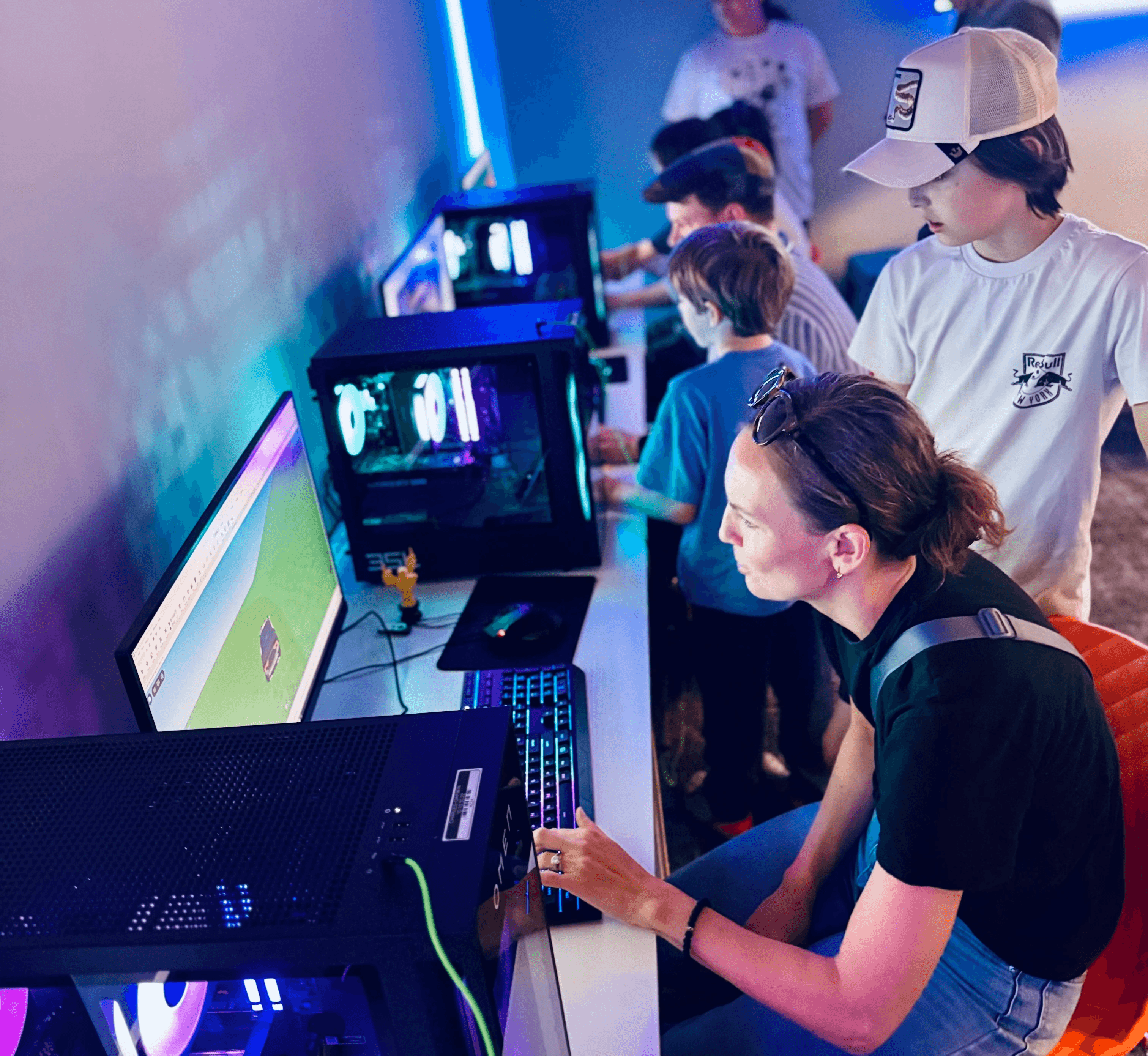
Anyone can celebrate a finished project. Fewer people sit there for the fifteen minutes where it's broken and nobody knows why. That's the moment that actually matters to a kid, and it's the one most parents accidentally skip because it's the least fun to watch. Showing up for it tells them the work matters to you, not just the result.
You don't need to fix anything. You don't even need to understand the bug. Just don't leave the room.
6. Let them show off in front of someone other than you
At some point, your feedback stops being enough - they want a real audience. That's normal, and it's worth feeding. Ask if they'd show a grandparent, a sibling, or a friend what they built. Bring it up the next time someone asks "what's new with the kids." Kids who explain their projects to a second or third person end up understanding their own work better, because each new audience asks a slightly different question.
None of this requires you to learn to code. It requires you to be curious about something your kid already loves, ask a few better questions than "is it good," and stay in the room for the parts that aren't fun to watch. That's most of what connection ever is - in coding or anywhere else.
Share This: